
On-Site Story: When Wood Grain Purity Meets Sales Pitch Hype
For this Pre-Shipment Inspection (PSI) commissioned by a US retail importer, our inspector traveled to Shaowu City in Fujian Province — a well-known regional hub for bamboo product manufacturing. The product under inspection was large acacia wood salad trays.
As our inspector later recounted, upon arrival, the factory sales representative greeted him with an air of absolute authority:
"We were actually the very first factory in Shaowu to transition from bamboo processing to acacia wood. Because of that, we are absolute experts in acacia. We use genuine imported acacia wood, never the cheap Hainan variety, so our knots, color tone, and texture are top-tier. Plus, acacia is much softer than bamboo, making it easier to machine. Our workmanship is flawless — you don't need to worry about a thing."
Our inspector smiled, nodded politely, and replied: "That's great. Flawless quality is a win for everyone — the buyer, the trader, and your factory."
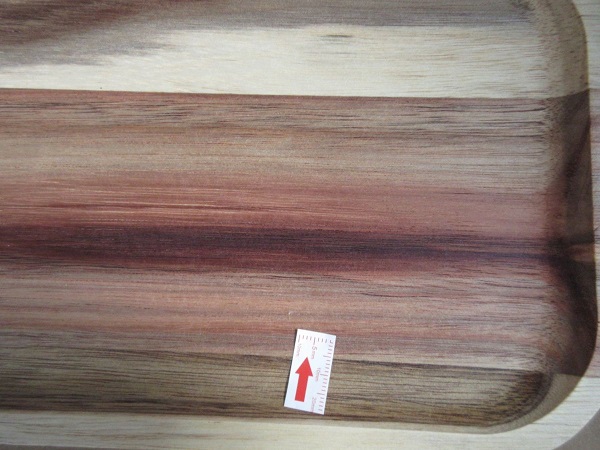
However, once the inspection commenced on the production floor, a glaring visual defect immediately surfaced: severe color variation between spliced wood panels.
Faced with the evidence, the factory representative quickly pivoted to defensive excuses:
"The nature of acacia wood is just like this! This is the natural look of solid wood. Honestly, maybe you guys don't inspect many acacia products and aren't professional enough to understand wood characteristics..."
Instead of getting into a heated argument, our inspector remained calm and walked directly over to the wood-splicing workshop. Finding the lead artisan, he asked cordially:
"When assembling these large boards, can we sort and group pieces with similar grain and color tones together? Wouldn't the final visual harmony be much better?"
The master artisan nodded candidly:
"Of course it would. It just takes a bit more time to properly sort and select them beforehand."
Hearing this, the factory sales rep quickly changed tune, stumbling over a new excuse:
"Well, if we do that, it adds labor costs, and the client's purchasing price is already so low..."
Our inspector calmly closed the loop:
"We certainly cannot interfere with commercial pricing, but our role is to provide practical, feasible solutions within our scope to help deliver the best possible quality and appearance to both buyers and end consumers."
The Hard Lesson: When a factory blames the material for a defect that can be solved with better sorting, the real issue isn't the wood — it's the process.
Defect Analysis
This defect was found during our pre-shipment inspection services for acacia wood salad trays. It is a typical and recurring aesthetic quality issue, so we have documented it here as a reference to help you brief your supplier before mass production.
| Finding Analysis | Details |
|---|---|
| Product | Acacia wood salad trays |
| Defect | Color difference between spliced wood panels |
| Root Cause | Lack of sorting and color-matching before and after splicing |
| Corrective Action | Establish color swatches/bands and enforce pre- and post-splicing sorting for the factory |
| Frequency | ⭐⭐⭐☆☆ |
| Rework Difficulty | ⭐⭐⭐⭐☆ |
| Rework Collateral Risk | ⭐⭐⭐⭐☆ |
What Is Spliced Color Difference and Why Does It Matter?
Acacia wood is celebrated for its rich, contrasting natural grains, but when individual staves or blocks are glued together to form a large tray, haphazard assembly creates a chaotic visual patchwork. For importers relying on product inspection to maintain brand consistency, this is a recurring blind spot.
Major issues include:
- Dark and light wood juxtaposition — placing heavily contrasting sapwood and heartwood directly next to each other
- Inconsistent grain direction — making the surface look disjointed rather than unified
- Compromised retail appeal — kitchen and dining products rely heavily on visual symmetry; mismatched panels look cheap and poorly manufactured on store shelves
Root Cause Analysis: Why Does It Happen?
Based on over 17 years of quality control experience in China, spliced color difference is almost never about "natural variation" — it's about production management.
1. Zero Sorting Discipline
Workers grab raw staves blindly from the bin during gluing without grouping them by tone.
2. Speed Over Quality
Rushing production quotas to save minutes at the expense of aesthetic continuity.
3. Shifting Blame to "Nature"
Factories often hide poor manufacturing management behind the excuse of "natural wood variation." A thorough factory audit can identify whether sorting procedures exist at all.
How to Fix It: Practical Solutions
Immediate Corrective Action
- Isolate severely mismatched units from the current batch.
- Establish a standardized sorting protocol for the remainder of the batch.
Long-Term Preventive Measures
| Measure | Description | Effectiveness |
|---|---|---|
| Color Swatch Standard | Provide physical color bands or approved master swatches to the factory floor. Define acceptable color range so workers must sort before and after splicing. | ⭐⭐⭐⭐⭐ |
| Pre-Splicing Sorting | Sort wood pieces by color and grain before splicing — not after. This is where the quality control needs to happen. | ⭐⭐⭐⭐⭐ |
| Post-Splicing Inspection | Inspect finished panels for color consistency before they move to final assembly. | ⭐⭐⭐⭐ |
| Pre-Production Panel Sample | Request a spliced panel sample before mass production to verify the factory's sorting quality. | ⭐⭐⭐⭐⭐ |
On-Site Evidence Gallery
The unedited technical snapshots below document the color difference observed during the inspection:
Rework Effort & Risk Assessment
| Evaluation Metric | Rating | What It Means |
|---|---|---|
| Frequency | ⭐⭐⭐☆☆ | High. Common when factories try to maximize material yield without spending time on manual sorting. |
| Rework Difficulty | ⭐⭐⭐⭐☆ | Very Difficult. Once glued and sanded into a finished tray, disassembling or re-staining spliced panels is structurally destructive and labor-intensive. |
| Rework Collateral Risk | ⭐⭐⭐⭐☆ | High. Stripping or attempting to bleach panels to match colors often ruins the wood's protective finish or structural integrity. |
💡 QC Insight for Buyers
For procurement professionals and brand owners sourcing solid wood products:
- Don't accept the "natural wood" excuse blindly. While variation is normal, chaotic splicing is a result of poor sorting, not nature.
- Set visual benchmarks early. Provide the factory with clear photos or physical reference swatches showing the maximum allowable color contrast. A factory audit before placing orders can verify whether the facility is capable of meeting these standards.
- Demand pre-splicing sorting checkpoints. Make sorting a mandatory step in the factory's internal SOP before glue is applied.
- Don't be misled by sales pitches. The factory in this case claimed to be "absolute experts" — yet the most basic quality step, sorting, was entirely skipped. Reputation is no substitute for process discipline in your supply chain.
The Bottom Line
This case study is part of our ongoing effort to share real, on-the-ground findings with buyers, brand owners, and sourcing professionals. The goal is simple: help you understand what can go wrong in production — and how to prevent it before it costs you time, money, and reputation.
Key takeaway: Natural wood has variations — but good craftsmanship controls how those variations are presented. When a factory blames the material for a defect that can be solved with better sorting, the problem isn't the wood. It's the process.
Let CNQ Protect Your Shipment
At CNQ, our QC inspectors look past marketing claims and factory bravado to evaluate the actual workshop practices. Before your woodenware ships, we ensure:
- Strict evaluation of surface finishes and aesthetic consistency through our product inspection services
- Practical, constructive guidance given directly to workshop artisans to fix root causes
- Objective, photo-documented reports to keep your suppliers accountable
Don't let mismatched wood products damage your brand. A simple, one-day inspection can save you from costly returns and customer complaints.
Contact us today to ensure your wood products meet your quality standards before shipment.
Disclaimer: This case study is based on an actual pre-shipment inspection performed by China Quality Service. Product details and factory information have been anonymized to protect client confidentiality. The technical analysis and recommendations provided are for educational purposes only and should not replace professional on-site evaluation tailored to your specific product and supplier requirements.